

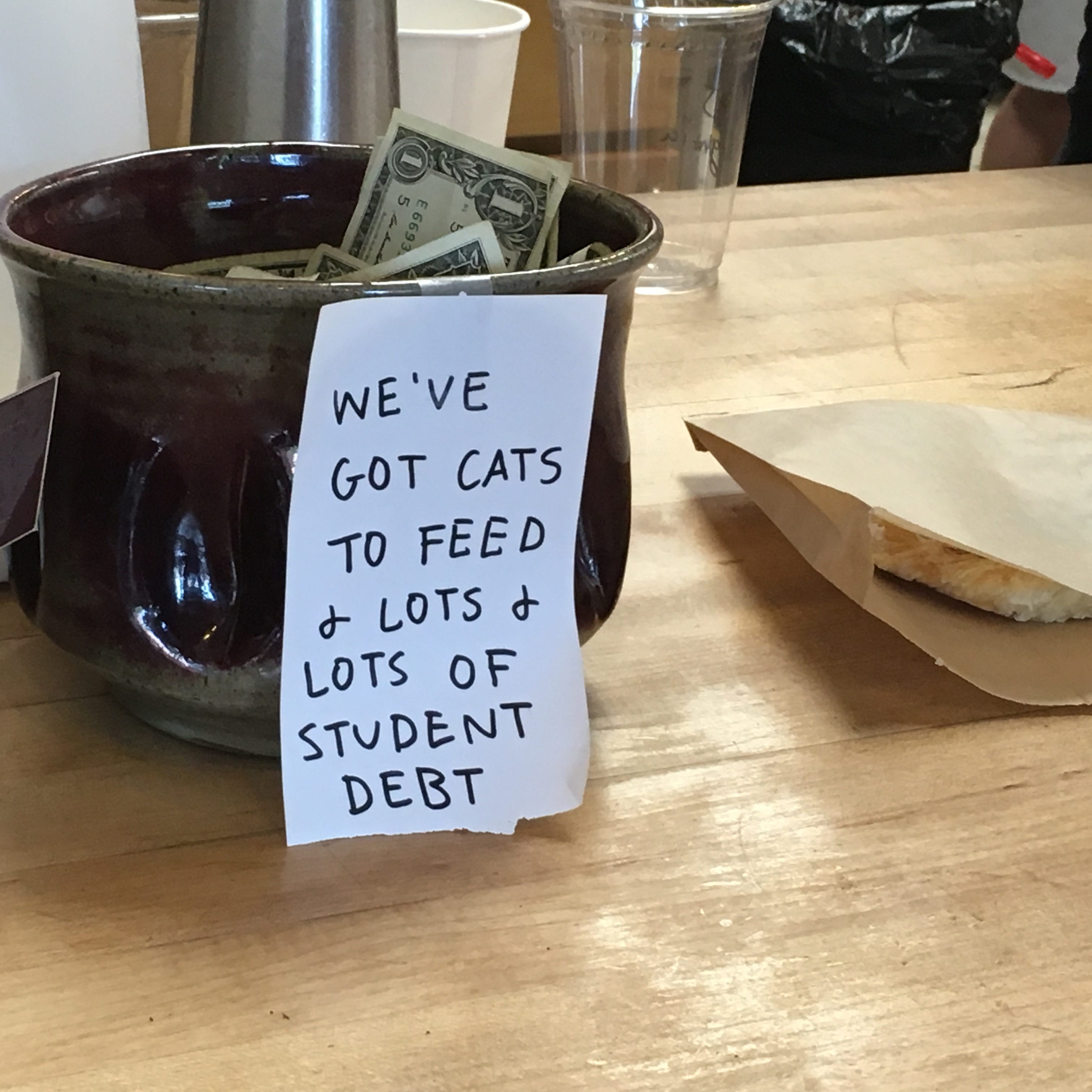
Earlier this summer, a friend and I met for coffee and a light brunch at a café in our neighborhood. We both placed our orders, and—to my surprise—we were asked to pay before the order arrived. At the end of the credit card transaction, the machine asked me to leave a tip.
My flabbers were gasted because that particular brand of audacity hadn’t appeared in any transaction I’ve had in Spain since moving here two years ago.
Two things struck me about this transaction. First, generally speaking, in Spain, you won’t be asked for payment before you’ve even received your order. Second, I’ve never—not once—been asked to add a tip onto the payment when using a credit card here.
As an American, I am well acquainted with tipping culture. I waited tables one summer in college, and I like to think of myself as a good tipper because I know how hard that job is—all while making a grand $2.13/hour + tips.
But that’s not how Spain works.
In Spain, servers are paid a “living wage” (what’s considered “livable” is debatable, but I digress). Tips are not expected, but if you liked the service, you’re more than welcome to leave a tip, usually not more than 10% of the total bill. This is the standard throughout Europe, and if an additional tip is added, your bill will clearly state as much.
Which brings me back to the café in my neighborhood.
I go out of my way to avoid most of the touristy spots in Valencia. The food is never as good as the local favorites, prices are high, and, while service can be iffy in Spain, at those spots, it’s often outright awful.
This café has clearly decided tourists are their bread and butter. Maybe they’ve had one too many not pay their bill at the end, so they grab payment upfront now. Maybe the owners spent some time in the U.S., where it’s pretty common to place your order at the counter, pay, and then pick it up a few minutes later. I really don’t know, but I didn’t like it, and I liked it even less when I was presented with the tip option.
I have lots of opinions on the U.S. tipping system, especially post-COVID, when tipping seems to be a disease running rampant everywhere, from takeout restaurants to automatic car washes. Americans have been conditioned to tip generously, and—as an adult—I’ve watched it shift from a standard 15% of the bill to 20% and now creeping toward 25%. Meanwhile, that archaic $2.13/hour in Tennessee hasn’t changed in decades.
I still don’t believe it’s up to the customer to pay the server. That’s the business’s job, and it should be reflected in prices. If I buy a steak dinner and the other customer buys a salad, and we presumably received the same level of service, why am I expected to leave more money than the salad customer?
It makes little sense to me, and if you dig into the history of tipping, it gets worse.
Tipping in the U.S. became prevalent following the Civil War as a way to avoid paying emancipated Black workers a direct wage, forcing them instead to rely on the generosity of customers.
The system here feels far fairer than the one where I wait on a table for an hour, work hard to make sure they’re happy, and at the end, they can decide to leave me no tip, very little, or—worse—a gospel tract. (This was particularly bad on Sunday afternoons following church services in the Bible Belt.) The server gets paid no matter what, and all that fawning servers do in the U.S.? It’s not a thing because their wages aren’t dependent on the level of ass-kissing they do.
I write about building a life in Spain—slowly, imperfectly, and with a lot of trial and error. If you’re not already subscribed, I’d love to have you.
If you’re already here, gracias. Hitting the ❤️ button below helps others find poco a poco.
More from poco a poco:

The Apps I Use to Keep Life in Spain Running

You can’t hit the ground running in a new country if you don’t have some clue where to start.
Chasing Familiar Flavors in a Spanish Kitchen

“It doesn’t taste quite right,” I complained to Will. “It’s missing something.”