

Last year, when I was sick with a nasty virus, I wrote a post called “Sick in Spain.” New to Spain and desperately missing my beloved DayQuil and NyQuil, I scoured the internet, looking for something—anything—to relieve my symptoms.
That’s when I stumbled upon Frenadol, which is often described online as Spain’s version of DayQuil, NyQuil, or Theraflu.
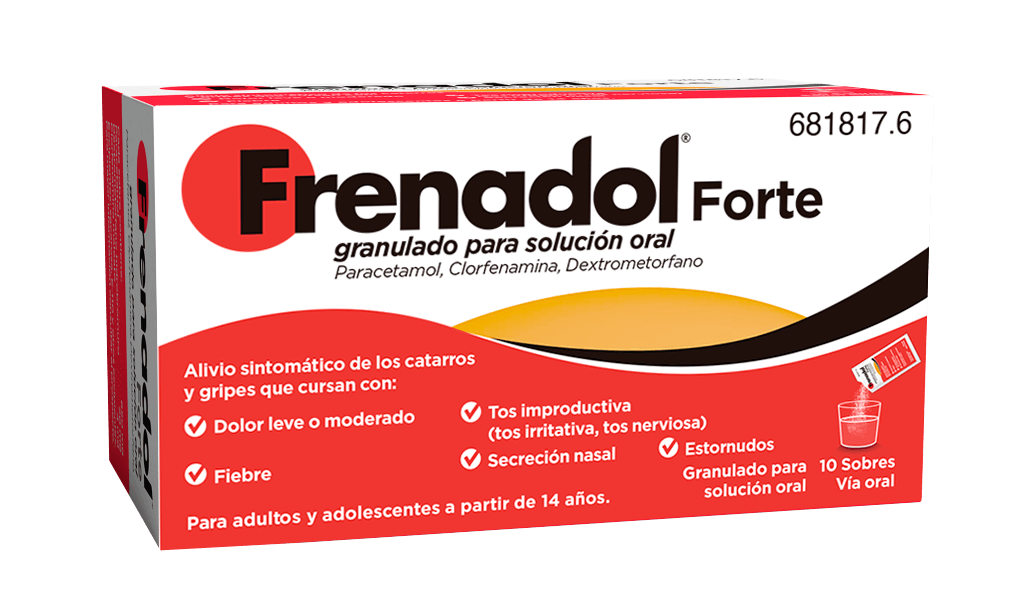
If you talk to Americans living abroad, the common refrain when a winter cold strikes is that they miss NyQuil.
Me, too.
It’s a cure-all, managing fever, congestion, aches, pains, and sleep all in one glorious liquid (or tablet, but I prefer the liquid).
But if you come to Spain expecting to find something like NyQuil, you’re going to be sorely disappointed.
Instead, think of your pharmacist as the healthcare professional they are. You offer your symptoms; they offer potential solutions.
As I pointed out in “Sick in Spain,” your local grocery store doesn’t carry over-the-counter meds. That job is reserved for the pharmacy. In fact, you can’t buy Frenadol on Amazon.es. It has to be purchased through a pharmacy.
Most medications sold in Spain aren’t an all-in-one like you commonly find in the U.S. This is where that Spanish you’ve been practicing comes into play, and it’s time to get thee to thy farmacia on the corner.

Once there, explain your symptoms to the pharmacist (whip out Google Translate if needed), and the pharmacist will make some recommendations based on what’s giving you trouble.
Pharmacists in Spain are highly educated, trained healthcare professionals. They can act as a sort of triage, letting you know when it’s time to go to the doctor or if they can offer something over-the-counter to put you on the mend. They’re on practically every corner in every community, with that bright green cross above the doors acting as a welcome mat.
And let’s be real: The better your pharmacist knows you, the better they can help you.
My pharmacist knows I speak some Spanish, but I’m far from fluent, and she is incredibly patient when I need to break out Google Translate or switch to Spanglish. (She speaks some English.) But it took time for that relationship to form, and now, I can walk in, describe what’s going on with me, and she will offer some personalized solutions.
Pharmacies don’t always have the medication you need in stock, just like in the U.S., but the system is efficient. If a prescription isn’t in stock, the pharmacist can order it, and it will either appear later that same day or the next morning.
It’s intimidating—walking into a pharmacy in a new country, maybe not speaking the language, and not knowing how the system works. However, your local farmacia wants to help. Genuinely. Ask questions. Come prepared with a symptom list in Spanish if needed. Then watch as a little magic happens.
I write here about building a life abroad—slowly, imperfectly, and with a lot of trial and error.
You can subscribe to receive new posts by email, or support this work with a paid subscription, one-time contribution, or just hit the ❤️ button below to help others find poco a poco.
If you’d like to reach out directly, you can find me at jen@jeninspain.com.
For more on healthcare in Spain:
Doing Healthcare the Spanish Way

One of the questions I often get about living abroad is about healthcare. After all, healthcare in the United States is anything but straightforward. As an adult, you have to learn how to navigate a maze of deductibles, copays, out-of-pocket maxes, denials, appeals, and much, much more.
Sick in Spain

Walk into any Walmart, Target, Kroger, or Publix in the U.S., and you can buy a pantry’s worth of over-the-counter medications. There are aisles and aisles of pain relievers, cough syrup, allergy medications, eye drops, and more. It’s a self-medicating paradise for those who dislike going to the doctor (or who can’t afford to go).
A Real-Life Breakdown of Prescription Costs in Spain

When you think of healthcare, your mind probably first goes to health insurance. And rightfully so. If you’re from the U.S., it is one of your largest monthly expenditures.
Another thing to keep in mind is that there are many pharmacies that strongly encourage you to use herbal remedies in place of pharmaceuticals. In fact they bring these out first. I ran into this once when I had a terrible cold and even with the “medicine” I was not feeling better. I guess part of the blame was on me for not researching what was recommended to me but I hardly was in a condition to and when I eventually did, I found that it was just herbs / hope / wishes. The few times I’ve been back to a pharmacy since then, and I’m always pointed towards some herbal remedy, I politely pass and ask for something else. Also there always is the upsell when you are checking out… “don’t you also need……”
I use Frenadol Complex as my replacement to Nyquil and Fluimucil Solución for congestion. Feel better soon.